At what price does a hectare of tomatoes stop losing money? That number is the break-even price, and it is the first line we read in a plan.
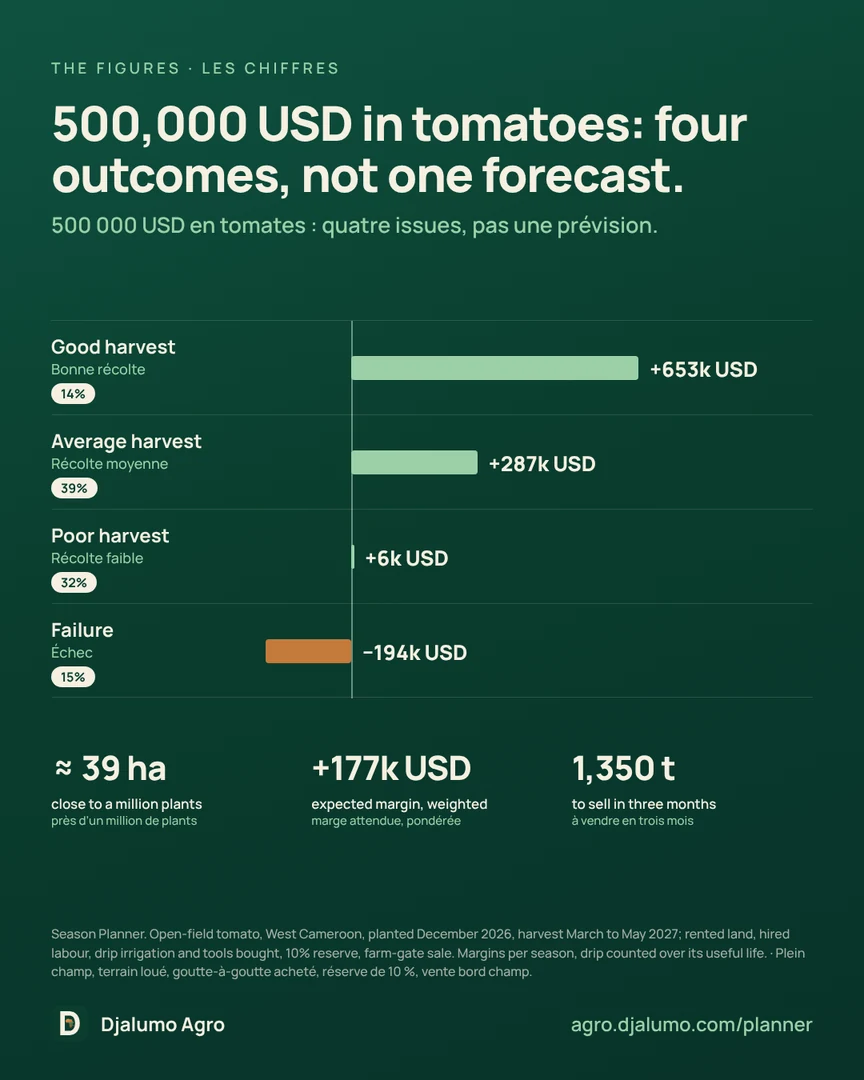
Take one hectare of open-field tomato in West Cameroon, planted in December 2026, starting from nothing: rented land, hired labour, a motor pump and tools bought, sale at the farm gate. The Season Planner adds up every cost of the season, spreads the equipment over its useful life and divides by an average harvest, about 34.6 tonnes sold.
The result: 121 FCFA per kilogram (0.21 USD), or about 2,400 FCFA for a 20 kg crate.
The plan expects about 251 FCFA per kilogram at harvest, from March to May. The price can therefore fall by half before this hectare loses money, if the yield is average. The other way round: at the expected price, it covers its costs from about 15 tonnes per hectare, against 35 in an average irrigated dry season.
At project scale the logic holds and the stakes grow. Every 10 FCFA per kilogram lost at sale removes about 346,000 FCFA per hectare, some 34.6 million FCFA (59,000 USD) over 100 hectares.
A break-even price predicts nothing. It measures the room a project has before the capital is committed.
Sources
- MINADER, tomato technical and economic sheet, 2024